The White House Press Pass Ruling Is About Process, and the Public's Window In
A federal judge ordered the White House early Thursday to restore access for journalists from CNN, MS NOW and Politico, temporarily reversing a sweeping ban imposed after President Donald Trump criticized their coverage. The immediate result is practical: reporters with hard passes can again enter the complex while the lawsuit proceeds. The legal result is narrower. The court found the outlets likely to prevail on a claim that officials revoked those credentials without constitutionally adequate notice or an opportunity to respond, not that every question about presidential control of access has been settled.
U.S. District Judge Timothy Kelly's September 24 temporary restraining order lasts 14 days. It directs the administration officials named in the case, other than the president, to reinstate and restore the plaintiffs' access. The court expects expedited consideration of a longer-lasting preliminary injunction. A temporary order preserves the position of the parties during litigation; it is neither a final verdict nor a permanent guarantee of a press pass.
What changed at the gate
Trump announced on September 18 that he was banning the three organizations from the White House, accusing them of false and negative reporting. Their journalists were turned away and their hard passes deactivated or taken. CNN, MS NOW and Politico sued on September 21, alleging both retaliation for their reporting under the First Amendment and a denial of due process under the Fifth. The White House subsequently sent letters identifying its objections and offering the outlets until Friday to respond, but the exclusions had already taken effect.
The timing mattered to Kelly. In the order, he wrote that the government did not dispute the absence of notice and an opportunity to be heard before the passes were revoked. Existing appeals-court decisions, including Sherrill v. Knight and Karem v. Trump, treat an established White House hard pass as an interest that cannot simply be withdrawn without due process. The judge also found no sufficiently clear, preexisting standards giving these reporters fair warning of the conduct that could lead to a complete revocation.
The government argued that access is a privilege and that national security and professional standards justified the restrictions. Kelly acknowledged the importance of protecting national security. But he found little in the present record connecting the revocation of these hard passes to that goal. Some of the reporting cited in the administration's letters was months or years old, and the letters arrived after the ban. His analysis concerns the evidence before him at this preliminary stage; it does not establish that security concerns can never support a carefully justified restriction.
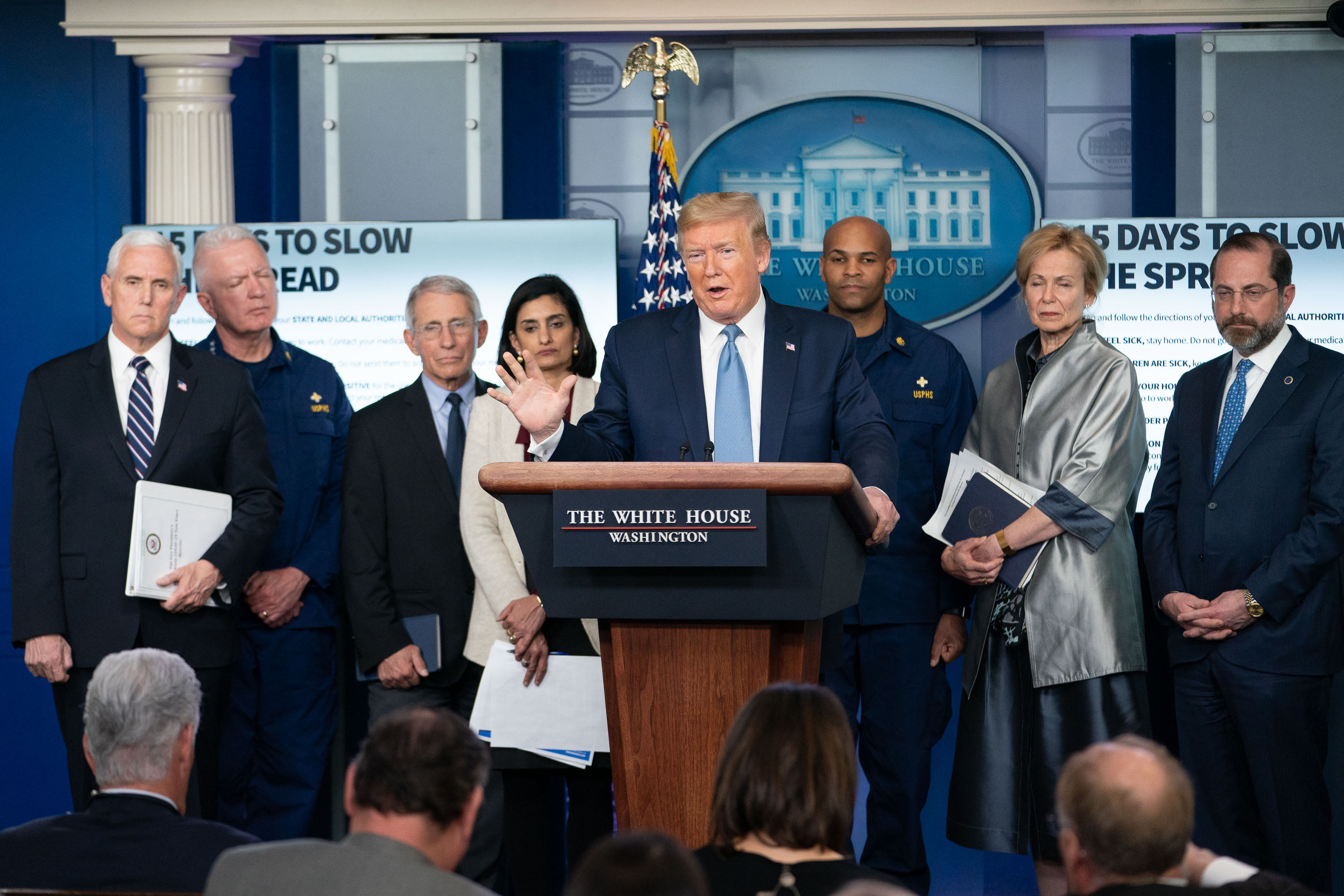
Archive photograph: a White House coronavirus briefing on March 16, 2020. This image does not depict the September 2026 access dispute. Official White House photo by D. Myles Cullen, public domain.
The distinction between a building pass and a seat at every presidential event is important. A hard pass provides routine entry to the White House complex; it does not promise admission to each limited-space encounter. Here, the three outlets say they were denied access to the grounds altogether. That broader exclusion also affected shared news coverage: CNN's removal from the television press pool prompted the other participating networks to suspend that pool, according to CBS News.
A procedural ruling with a wider shadow
The outlets' First Amendment argument remains consequential. They say the president singled them out because he disliked their viewpoints, while the administration disputes their characterization and defends its stated concerns about sensitive information and standards. Kelly did not need to resolve the full retaliation claim to grant temporary relief: he concluded the Fifth Amendment process claim alone was likely to succeed. Readers should not mistake that procedural holding for a final ruling on motive or on the scope of the First Amendment.
That restraint is a feature of the decision, not a sign that the stakes are small. A government may set neutral security rules for a crowded and sensitive workplace. The question raised here is whether it may impose a total credential ban first, then explain the standards and offer a chance to contest the decision only afterward. On this record, Kelly said the established process was not followed. His order requires a return to access while the court tests the government's case more fully.
For a citizen who never enters the press room, the consequence is less abstract than it sounds. Pool cameras and credentialed reporters gather observations that travel far beyond Washington. Their questions, footage and firsthand accounts are part of the information people use to judge public officials. The public is not entitled to agree with any given outlet, but it has an interest in a system where access is governed by articulated rules rather than shifting judgments about favorable coverage.
The next two weeks will test how the administration responds and what additional evidence either side produces. An appeal or a motion for a preliminary injunction could change the practical position again. For now, the court's message is specific: a White House press credential cannot be withdrawn in this fashion without the process the law requires. The larger argument over who gets to stand inside the gates, and on what terms, is still unfolding.


