
Lake Nyos Killed Without a Sound. Forty Years Later, the Warning Is Still Alive

On the evening of August 21, 1986, Lake Nyos looked almost peaceful. Then an invisible cloud moved through the valleys of northwestern Cameroon. People collapsed where they stood. Livestock fell beside them. By morning, entire communities had been transformed into scenes of mass death without fire, lava, or the warning roar people associate with a volcano.
Forty years later, the Lake Nyos disaster remains one of the strangest natural catastrophes in modern history. It also remains a political story about risk. The science explains how the gas escaped. The harder question is why communities living beside known hazards are so often expected to survive with the least protection.
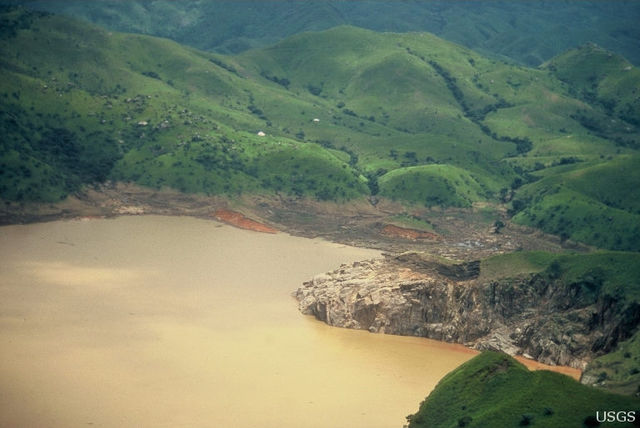
The night the air turned lethal
Lake Nyos sits inside a volcanic crater. Carbon dioxide from magma below the region had dissolved into the lake’s deep water over time. Under pressure, the gas accumulated until the lake released it in a rare event now commonly called a limnic eruption.
Because carbon dioxide is denser than air, the cloud hugged the ground and flowed downhill. It displaced oxygen across villages near the lake. The people and animals in its path were not poisoned in the conventional sense. They were suffocated by air that could no longer sustain life.
Science arrived after catastrophe
The disaster initially confused investigators because the lake had not erupted like a familiar volcano. International teams eventually pieced together what happened through water chemistry, survivor accounts, and the landscape itself.
Engineers later installed pipes that bring gas-rich water upward. As pressure falls, carbon dioxide escapes in a controlled fountain rather than accumulating at dangerous levels. It is an elegant solution, but it was built only after extraordinary loss.
The warning beyond Cameroon
Lake Nyos changed how scientists monitor deep tropical lakes, especially those near volcanic systems. It also demonstrated that hazards do not need to be visible to be urgent. A quiet landscape can contain a crisis that institutions have not yet learned to name.
That lesson reaches far beyond geology. Governments routinely respond more decisively after disaster than before it. Prevention receives less attention because success looks uneventful. No village is destroyed. No dramatic footage exists. Nothing happens, which is precisely the point.
Memory is part of protection
Commemorating Lake Nyos should not reduce the dead to an unusual scientific case study. The victims lived in communities with families, economies, and histories. Their deaths forced the world to understand a danger it had barely imagined.
Forty years later, the most meaningful memorial is not awe at the lake’s power. It is sustained investment in monitoring, local warning systems, public education, and the right of people near hazardous environments to receive protection before tragedy makes them visible.
Sources
Image credit: Jack Lockwood, U.S. Geological Survey. Public domain.


