The Bridge
Feature II

James Baldwin
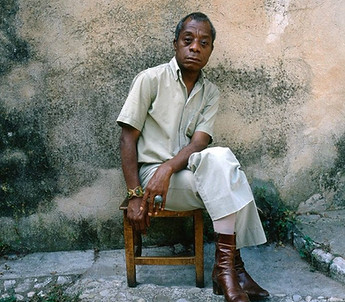
James Baldwin appears at the center of this project because he refused distance. He wrote from inside inheritance rather than above it.
Where Du Bois analyzed structure, Baldwin forced confrontation.
Baldwin did not write to explain history. He wrote to expose its presence.
He rejected the comfort of hindsight. He refused the idea that injustice belonged to the past. Instead, he insisted that history lived inside the present, shaping language, desire, fear, and denial. His work bridges structure and feeling, analysis and intimacy.
This is why Baldwin sits between Groundings and Continuities. He translated inheritance into responsibility.
This is why Baldwin sits between Groundings and Continuities. He translated inheritance into responsibility.
Baldwin understood that American identity depended on forgetting. Forgetting violence. Forgetting exploitation. Forgetting who paid the cost of progress. He saw that innocence was not ignorance, but strategy. His essays do not allow the reader to remain neutral. They name how denial functions, how language conceals harm, how comfort is protected at the expense of truth. What makes Baldwin essential here is not that he described racism. Many have done that. He described what racism does to everyone involved. How it distorts moral vision. How it produces fear, defensiveness, and cruelty under the guise of normalcy.
He also understood the danger of symbolism. Baldwin watched Martin Luther King Jr. be transformed from a radical critic of American power into a national myth. King’s language was narrowed. His critiques of capitalism, militarism, and structural inequality were softened into abstractions about unity and progress. What had once been an indictment became reassurance
.
Baldwin recognized this transformation as intentional. Symbolism, when detached from material change, allows a society to honor a figure without confronting the conditions they challenged. Celebration replaces responsibility. Memory becomes selective.
What troubled Baldwin was not remembrance itself, but the way remembrance could be used to create distance. By placing injustice firmly in the past, the present is relieved of obligation. The image remains. The demand disappears.
This pattern is not confined to a single figure or moment. It repeats whenever critique becomes inconvenient. History is edited to comfort rather than to clarify. The past is framed as resolved, so the present can remain unexamined.
Baldwin bridges past and present by refusing that closure. He insists that inheritance is not symbolic. It is lived. It shapes how power justifies itself and maintains denial. His writing does not allow the reader to stand outside history. It places them inside its consequences.
This project places Baldwin at its center because he teaches us how to remember without distortion. He shows how easily progress becomes performance, and how quickly reverence can replace reckoning.
In Baldwin’s work, history is not something we look back on. It is something we are still being asked to answer.