What Happened to Ben Shapiro, and the Right?
- Sangwoo Cho
- 2 days ago
- 3 min read
For better or for worse, Ben Shapiro was my gateway into politics.
As a teenager, the idea of political correctness bothered me deeply. The seemingly ever-expanding list of rules governing what was permissible was overwhelming and incoherent to me, and social pressure to avoid voicing this sentiment only added to my resentment of progressive norms.
Enter 2017 Ben Shapiro: confrontational, blunt, and relentlessly unapologetic in pushing back against such expectations. Clips of Shapiro debating college students, often accompanied by sensationalist titles claiming he “destroyed” or “obliterated” his opposition, were everywhere. He was capitalizing on the new age of culture wars with his brand of “facts and logic.” And being the impressionable, angsty teenager that I was, I ate it up.
At the time, Shapiro felt representative of a new generation of conservative media. His rise coincided with an online political ecosystem increasingly dominated by personalities, and his borderline-abrasive style was practically built for YouTube. That success eventually helped turn the Daily Wire, which he co-founded in 2015, into one of the most promising conservative media outlets.
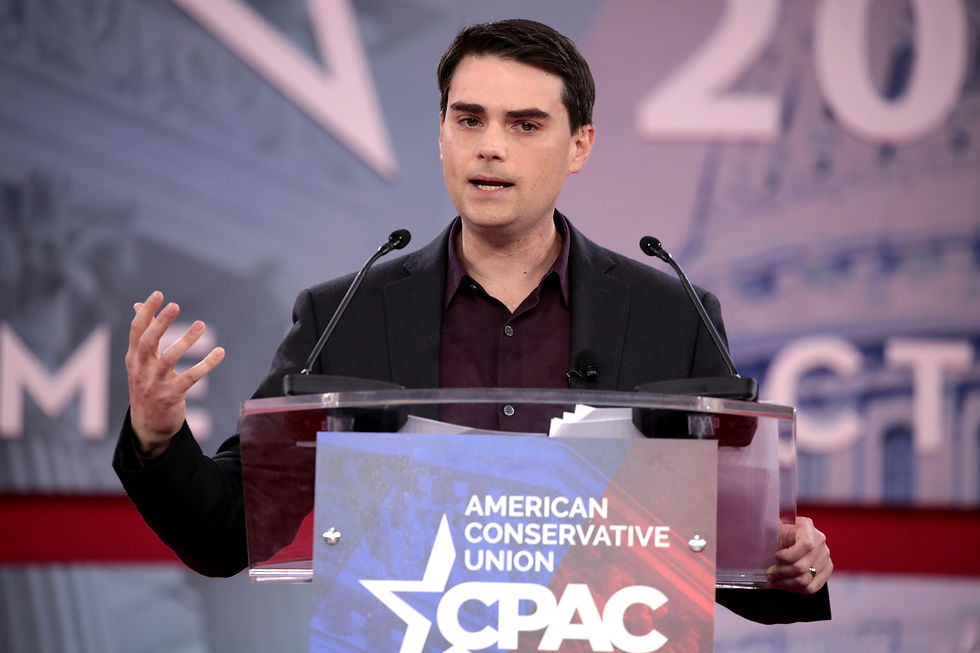
A decade later, however, Shapiro no longer seems to occupy the same position.
The Daily Wire has experienced a measurable decline. Its paid subscriptions fell by roughly a third in 2025, while its YouTube subscriber growth has largely stalled. Shapiro’s own videos have experienced declining viewership as figures such as Tucker Carlson and former Daily Wire host Candace Owens command growing audiences elsewhere. The conservative media empire he built no longer feels like the center of the movement.
But why? Shapiro’s particular brand of politics has not changed significantly. He remains supportive of free markets, socially conservative, fiercely opposed to the political left, and strongly supportive of Israel. The movement surrounding him, however, has become considerably harder to define. Nowhere is this divide more apparent than on the issue of Israel.
Support for Israel was once close to an unquestioned position within mainstream Republican politics. Shapiro has remained one of its most committed defenders, particularly following the October 7 attacks and the ensuing war in Gaza. Among younger Republicans, that position is becoming increasingly unpopular. A Pew Research Center survey conducted this April found that 57 percent of Republicans under 50 viewed Israel unfavorably. Among Republicans between 18 and 29, only 28 percent expressed a favorable opinion of the Israeli government.
This skepticism fits within a broader shift toward an “America First” approach to foreign policy. Figures such as Carlson have increasingly questioned why the United States should provide extensive political and military support to Israel, much as they have challenged American involvement in Ukraine and other conflicts overseas. Shapiro, by comparison, suddenly sounds much closer to the Republican foreign policy establishment that online conservatism once defined itself against.
The divide has become personal as well. Owens departed the Daily Wire in 2024 following increasingly public disagreements with Shapiro over Israel and accusations of antisemitism. Shapiro has since clashed repeatedly with Carlson and condemned his decision to host far-right commentator Nick Fuentes, an avowed antisemite and Holocaust denier whose stature in the online young conservative arena has continued to grow.
Criticism of Israel is obviously not synonymous with antisemitism, nor does opposition to American support for Israel make someone sympathetic to Fuentes. However, the coexistence of skepticism toward U.S. support of Israel and increasingly open antisemitism among the online right presents an uncomfortable division within the conservative movement. Shapiro now finds himself directly in the middle of that conflict.
There is a strange irony to Shapiro’s current position. While he once represented a younger, more combative alternative to traditional Republican media, he increasingly seems like part of the establishment being challenged by the next generation of online conservatives. His politics have remained relatively consistent while the movement around him has fractured into competing ideas of what “America First” should actually mean.
Perhaps that is why his decline feels more significant than the fortunes of one political commentator. Ben Shapiro helped introduce a generation, myself included, to internet conservatism. Watching that same internet move beyond him offers ample insight into just how different, and fragmented, the American right has become.


