The Internet Wants 2016 Back. It Is Really Mourning Something Else
2016
A summer of Pokémon Go crowds, Snapchat flower crowns, Vine loops and songs that seemed to belong to everyone.
2026
An internet asking to go back.
The “2016 is the new 2026” trend has spread across TikTok and fashion coverage this year, turning a decade-old aesthetic into a shared mood board. But the appeal is not really a plea to restore chokers, bomber jackets or a particular Instagram filter. It is nostalgia for an online world that felt less managed.
THE FILTER
Every era edits its own memory. The 2016 revival compresses a complicated year into warm colors, candid photos and recognizable pop culture. Political polarization was already intensifying. Algorithmic feeds already shaped attention. Harassment, misinformation and platform power were not waiting in the future.
Still, nostalgia does not need the past to have been perfect. It only needs the present to feel harder.
THE FEED
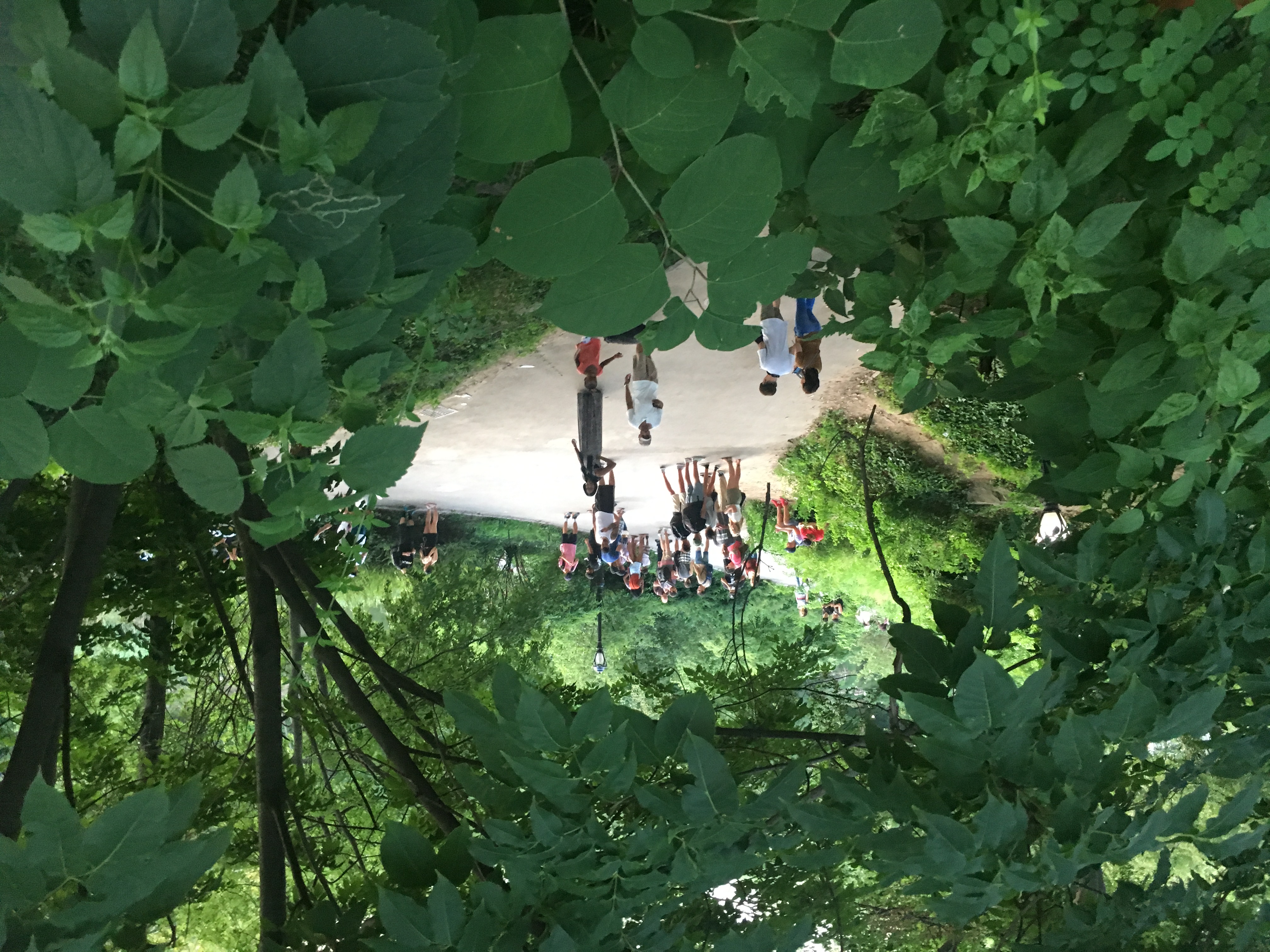
Pokémon Go players gather in Central Park on July 17, 2016. Photo by oinonio, CC BY-SA 2.0. Source:https://commons.wikimedia.org/wiki/File:Pok%C3%A9mon_Go_Players_in_Central_Park_(28355534986).jpg
What has changed is the texture of participation. In 2016, many people still experienced social media as a place they visited. In 2026, the feed feels more like infrastructure: continuous, predictive and increasingly filled with synthetic images, automated recommendations and content engineered to hold attention.
That difference helps explain why the trend travels so well among young people, including some who were children in 2016. They are not remembering a precise media environment. They are borrowing a symbol for spontaneity.
WHAT 2016 NOW STANDS FOR
A shared pop culture with fewer personalized realities.
Photos that looked posted, not produced.
Platforms that felt social before they felt fully optimized.
An online identity that could still be unserious.
A future that had not yet been filtered through a pandemic and an AI boom.
THE FEELING
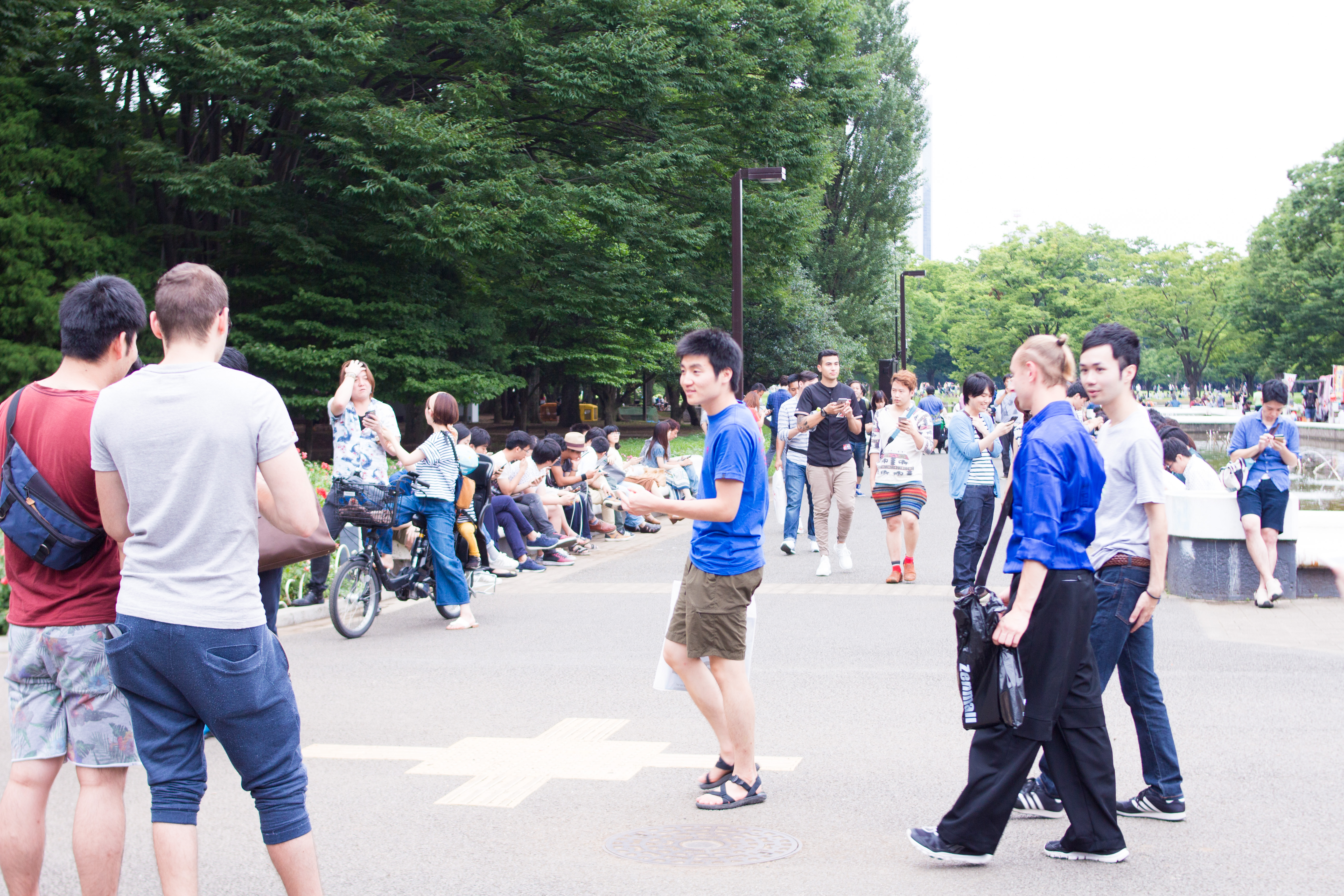
Players gather in Tokyo’s Yoyogi Park on July 23, 2016. Photo by Dick Thomas Johnson, CC BY 2.0. Source:https://commons.wikimedia.org/wiki/File:Pok%C3%A9mon_Go_Trainers_at_Yoyogi_Park_(32679985206).jpg
The most revealing part of the revival is its physicality. Pokémon Go brought strangers into parks. The mannequin challenge required a room full of people. Vine jokes became a common language repeated at school, work and parties. The internet escaped the screen because it gave people something to do together.
Today’s platforms can make culture move faster while making experience more solitary. Two people may open the same app and encounter completely different realities. Personalization is convenient, but it weakens the sense that everyone saw the same strange thing at the same time.
NOSTALGIA AS CRITIQUE
Researchers writing about the trend describe it as a response to uncertainty and digital fatigue. That makes the revival more than a costume change. It is an argument, however blurry, about what users want back: lower stakes, human imperfection and a little distance from systems that predict what they will click next.
The useful question is not whether 2016 was objectively better. It is whether platforms in 2026 can create the qualities people now project onto it. More control over feeds would help. So would clearer labels for synthetic media, stronger privacy defaults, smaller online communities and products that reward conversation instead of compulsion.
YOU CANNOT RELOAD A YEAR
The past cannot be restored, and its best parts were never as universal as nostalgia suggests. Yet the longing is real. People are using an old aesthetic to describe a present need.
They do not want every detail of 2016 back. They want an internet that feels like people are still inside it.
Cover photo: Pokémon Go trainers at Yoyogi Park, July 23, 2016, Dick Thomas Johnson, CC BY 2.0, via Wikimedia Commons.
✦ FROM THE ARCHIVE
This essay draws on Vogue’s account of the 2016 revival, research published by the Elon Journal on digital nostalgia, and Fast Company’s analysis of how the trend spread across TikTok.


