Sudan’s Drone War Is Making Civilian Life a Target
- Xavier Willis
- 2 days ago
- 3 min read
FIELD REPORT | SUDAN
1,000+ CIVILIANS
reported killed in drone attacks across Sudan between January and May 2026, according to the Office of the United Nations High Commissioner for Human Rights.
Sudan’s war is entering a more dispersed and technologically lethal phase. Drone strikes have widened beyond recognizable front lines, reaching markets, schools, fuel stations, water systems and civilian vehicles. Distance no longer offers reliable safety.
THE LEDGER
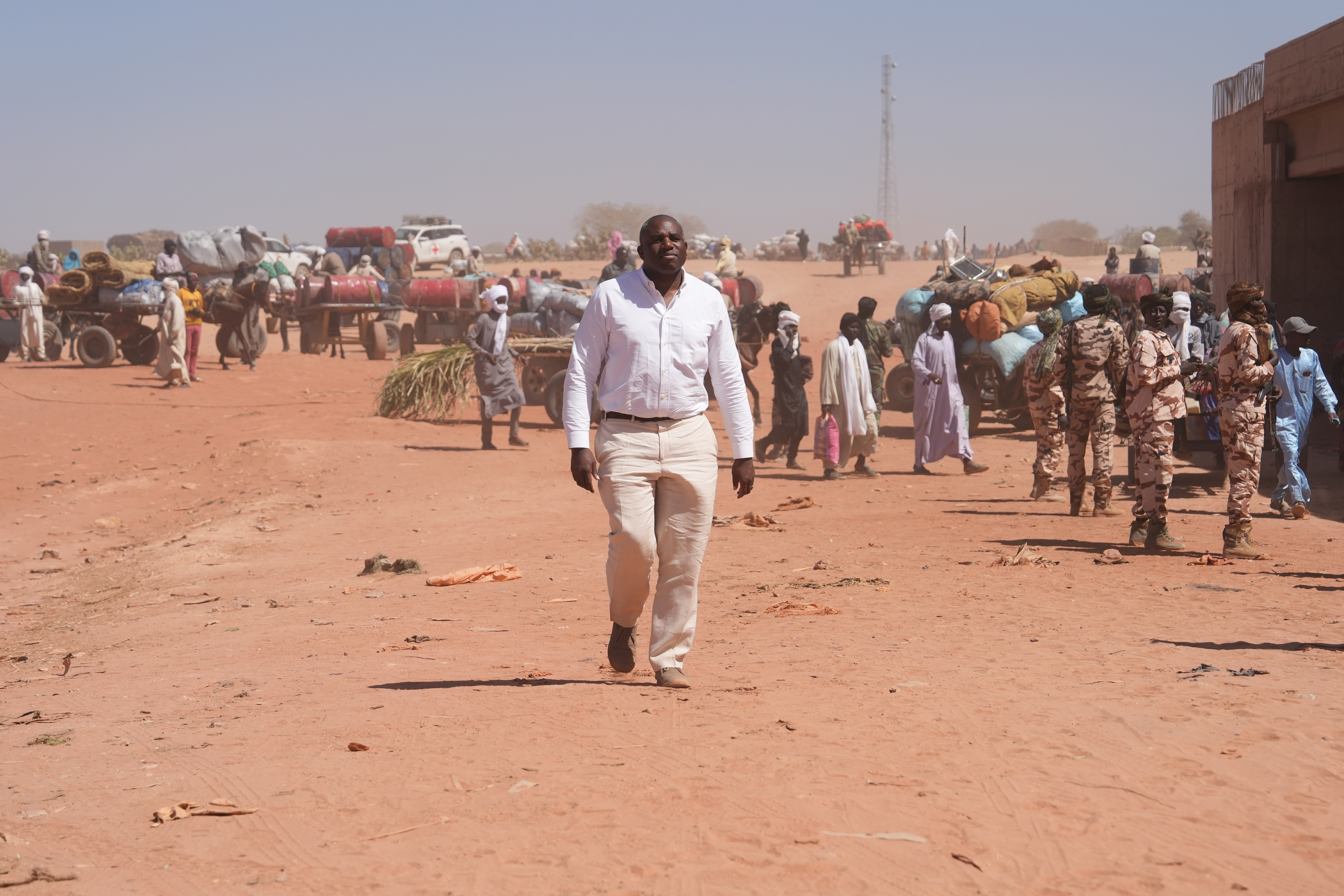
Sudanese refugees in Adré, Chad, near a crossing used by people fleeing the conflict, January 24, 2025. Photo by the UK Foreign, Commonwealth & Development Office, CC BY 2.0. Source:https://commons.wikimedia.org/wiki/File:Foreign_Secretary_David_Lammy_meets_Sudanese_refugees_in_Chad_in_the_border_town_of_Adre_on_24_January_2025_-_3.jpg
JANUARY TO MAY
The UN human rights office documented more than 1,000 civilian deaths from drone attacks during the first five months of 2026. That figure captures reported cases, not the full human cost in areas where access and communications are limited.
JUNE 6 TO JUNE 28
Around El Obeid in North Kordofan, at least 15 drone strikes killed at least 45 people and injured 41, according to the UN human rights chief. The reported targets included markets, schools, fuel stations, water infrastructure and civilian vehicles.
JULY 21
The UN’s representative for children and armed conflict warned that violence was intensifying in North Kordofan. The office reported at least 330 children killed or injured across Sudan in the first half of 2026.
A CHEAP WEAPON, A WIDE BATTLEFIELD
Drones change the geography of war. They can reach deep into territory, circle above roads and strike without placing a pilot nearby. For armed forces and militias, that makes surveillance and attack cheaper. For civilians, it makes ordinary movement more dangerous.
The technology can create an illusion of precision. A camera, a coordinate and a remote operator sound clinical. Yet precision depends on accurate intelligence, disciplined targeting and respect for international humanitarian law. In a fragmented conflict, those conditions can collapse.
WHEN INFRASTRUCTURE BECOMES THE FRONT LINE
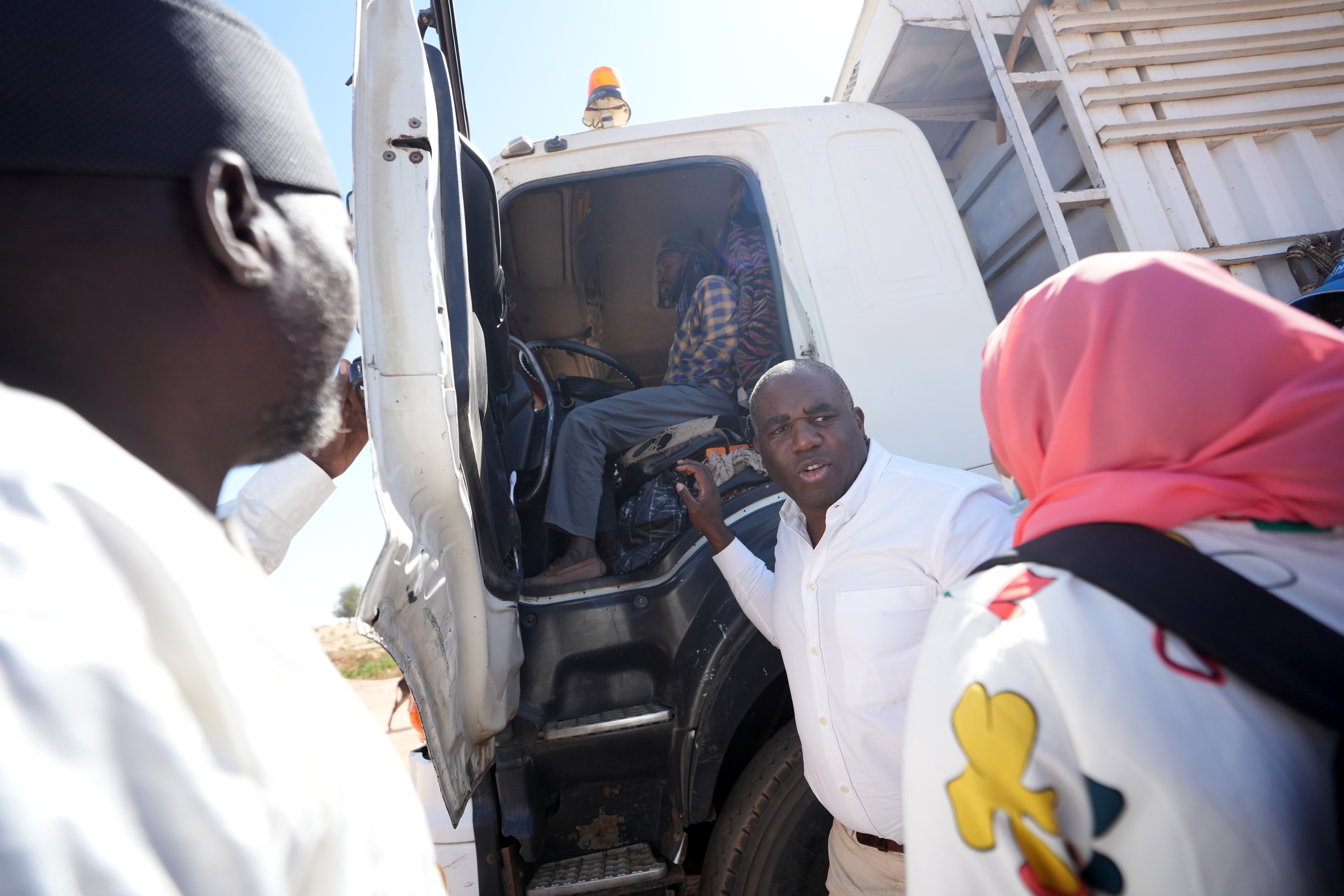
Humanitarian aid trucks near the Adré border crossing, a route heavily used by Sudanese refugees and relief operations. Photo by Russell Watkins/FCDO, CC BY 2.0. Source: https://commons.wikimedia.org/wiki/File:Foreign_Secretary_David_Lammy_meets_Sudanese_refugees_in_Chad_in_the_border_town_of_Adre_on_24_January_2025_-_7.jpg
A strike on a market does more than kill the people present. It interrupts food distribution and deters future trade. A damaged water system can expose entire neighborhoods to disease. An attack on a vehicle can sever the road to medical care for a rural community.
This is why civilian harm cannot be measured only by the number of people killed at the moment of impact. The blast travels through systems already weakened by displacement, hunger and the destruction of hospitals.
CHILDREN CARRY THE LONGEST WAR
The UN verified 1,681 grave violations against children in Sudan during 2025, including killing, maiming, recruitment and attacks on schools and hospitals. The 2026 warning suggests that the danger is continuing as fighting shifts and expands.
Children who survive a strike may lose a caregiver, a classroom, clean water or the route to a clinic. Those losses accumulate into a second emergency that lasts after the aircraft has gone.
WHAT ACCOUNTABILITY REQUIRES
International pressure must treat drone strikes as documented military actions, not mysterious technological events. Investigators need access to sites, remnants, witness testimony and command records. States supplying weapons, components or intelligence should examine how those systems are being used.
The parties to Sudan’s war remain bound by the rules protecting civilians. New tools do not create new permissions.
A drone may make violence remote for the operator. It does not make the consequences distant for the family below.
Cover photo: IRC health worker caring for Sudanese refugee Salima Yaya Adam in Gaga Camp, Chad, May 30, 2023, Chloé Leconte for IRC, CC BY-SA 4.0, via Wikimedia Commons.
✦ REPORTING NOTE
Civilian casualty figures and strike locations were checked against updates from the United Nations human rights office, the UN Office at Geneva, a July statement on attacks around El Obeid, and the UN’s Children and Armed Conflict office. Figures reflect documented cases and may not capture the war’s full toll.


