Puerto Rico’s Water Crisis Needs More Than Loans
- Shreya Dharavath
- 13 minutes ago
- 4 min read
“Do you have water right now?”
That’s how Adrian Florido started his interview with Sonia Palacios, a resident of the Monteflores neighborhood in San Juan, Puerto Rico.
“Not a drop.”
A hot summer day in Puerto Rico takes more than just staying in and keeping cool. In an article by the Los Angeles Times published in mid-July about the island’s new water rationing measures, executive president of the island’s Aqueduct and Sewer Authority Luis González stressed that “the water simply won’t be enough for us.”
On July 16, Governor of Puerto Rico Jenniffer González-Colón announced 48-hour on-and-off rationing periods as a drought mitigation measure for the northeastern region of the island, including the municipalities of Canóvanas and Río Grande. On September 1, the U.S. Drought Monitor reported that nearly 41% of the archipelago was in severe drought. Cattle had little feed and crops were dying; daily school and occupational operations were disrupted; and with growing concerns about water quality, rationing was expected to continue. Despite recent rainfall, the website maintained that groundwater levels on the island were simply too low to recover just yet.

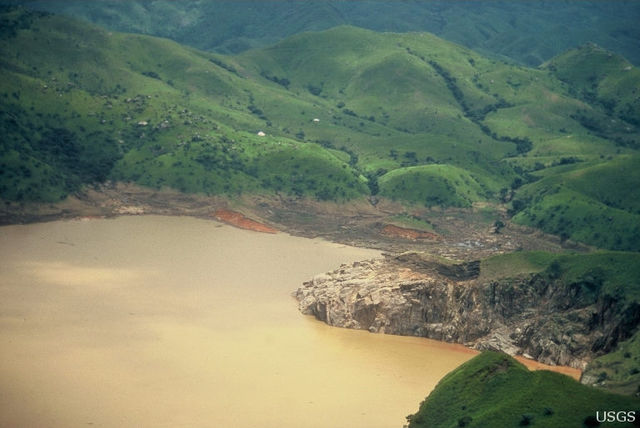
Image source and public-domain notice: U.S. Geological Survey.
As of September 2, Metro Puerto Rico reported that González-Colón’s expanded drought disaster declaration designated 38 municipalities to be available for federal drought disaster mitigation by the U.S. Department of Agriculture (USDA). Her press release relayed that farmers in primary and contiguous areas would be eligible for assistance through the USDA Farm Service Agency’s Emergency Loan Program, subject to the federal government’s eligibility requirements. A previous press release from August 26 included that additional programs were available through the Farm Service Agency, including livestock forage assistance, noninsured crop support, and emergency conservation funding.
The Emergency Loan Program’s fine print draws its own line on who it can help: farmers and ranchers can apply for drought relief, but residents down the road with neither farm nor crop get the ever-present rationing schedule. As if the island hasn’t been drowning in debt since its 2017 bankruptcy filing, Puerto Rican communities now face another burden on top of what El País International puts sharply: “underinvestment and inadequate maintenance of key infrastructure.”
Loans surely procure debt, but do they procure aid?
CNN talked to Hilda Rodriguez, the executive director of a San Juan nonprofit organization, who has been keeping a log of days without water in the Monteflores neighborhood in Santurce. She began with 22 logged days in 2021. This year’s log shows more than 200 days without water.
On September 2, NotiCentro reported on a resident of the Las Margaritas neighborhood in San Juan who has been without drinking water for 15 months. Mercado Rodríguez, another customer of Puerto Rico Aqueduct and Sewer Authority (AAA), correlates his lack of water service to the incumbent president, Luis González. “Before those 15 months, I had water. But, since this man arrived, I no longer have water.”
Aida Luz Peña lives on the third floor of an apartment complex at Lloréns Torres. In an interview with Democracy Now!, she said, “They’ve left us without water, yet we still get the bill. Charge us for what we actually use when the water is on.”
So these cases aren’t isolated. And alongside residents, workers of the water authority (AAA) want more than just aid. On August 11, AAA workers carried out a 24-hour strike for higher salaries. Left Voice reported more demonstrations on August 15 from San Juan residents in the Exigimos Agua (“We Demand Water”) coalition staged outside Fairmont Hotel, where González-Colón was celebrating her 50th birthday and attending a fundraiser. They expressed their opposition to water rationing, recurrent power outages, and the construction of a 2,000-acre luxury hotel, Esencia.
One of the demonstrations’ leaders, Alfred Cuyar, attributes the lack of experience of some AAA workers to AAA’s mismanagement. He suggests that a restructured water system should operate “as if it were a modern network that automatically readjusts itself… Because of that mismanagement, this area has repeatedly been left without water…. We’re desperate.”
Drought relief is temporary relief, even for farmers. There’s a debt you have to pay back. A loan-versus-grant explainer by Hudson Valley AgriBusiness expands that there are interest rates to look out for, and collateral farmers may have to offer in return. But investing in water service infrastructure that has long been neglected, especially leaky pipes that an oversight report says lose just over half of Puerto Rico’s clean water before it even reaches homes, is where it starts. AAA disputes that figure and places the loss at around 40%.
People like Alfred Cuyar are protesting all over Puerto Rico in the worst water crisis since 2015. The sun swallows their energy, the shirts on their backs suck up their sweat. Puerto Rican filmmaker Isaí Morales recently directed the short film En el Cielo Se Suda, following people bearing the viscous heat without running water. It’s a silent film but for the droning of fans, the trickle of salvaged water over a baby’s head, and the exhaustion fuming off two people on a couch on a hot summer day. The near-two-minute duration is enough for one’s mouth to go dry in an instant. Not even a drop.