Nostalgia as a Diagnosis
- Sangwoo Cho
- 2 days ago
- 4 min read
Bemoaners of “superhero fatigue” have been silenced, at least for the time being. Spider-Man: Brand New Day is dominating the box office after the biggest domestic debut of all time. While critics and casual audiences alike enjoyed the self-contained nature of the new Spidey film, I could not help but notice that the biggest film yet of this year was a sequel, the fourth in the series and the umpteenth overall installment in a broader cinematic universe. The latest Spider-Man film’s success is only part of a larger trend, with pre-existing franchises having dominated the box office over the past two years.

The Marvel Cinematic Universe is one of the biggest drivers of this trend by itself, but Marvel also made the narrative decision to lean fully into familiarity. After Avengers: Endgame, the franchise is six years into a multiversal arc, which gives producers free rein to bring back characters, and actors, from Marvel films that predate the MCU. Tobey Maguire and Andrew Garfield returning as legacy Spider-Men in Spider-Man: No Way Home, Hugh Jackman revisiting the iconic mantle of Wolverine in Deadpool & Wolverine, and actors reprising roles from pre-MCU Marvel films in the upcoming Avengers: Doomsday exemplify the “nostalgia cheat code” that Marvel now often relies on.
Marvel clearly intended for its post-Endgame franchise expansion to hinge on the old as much as the new. However, Marvel is not the only franchise that capitalizes on the familiar. Another goliath IP, Star Wars, has been guilty of similar behavior for a while. George Lucas further explored the Star Wars universe in the early 2000s through a prequel trilogy that proved more divisive than the widely acclaimed original, and Disney proceeded to acquire Lucasfilm and release a commercially successful but similarly divisive sequel trilogy in the 2010s. In more recent years, Star Wars has focused on several Disney+ series rather than feature films to expand the franchise. Harry Potter is yet another familiar name that just will not go away. After the Fantastic Beasts films yielded mixed results, Warner Bros. returned to the far safer bet: Harry Potter itself, this time as an HBO series.
Hollywood may be the clearest example, but the urge to revisit the past is visible across culture. Y2K fashion making the rounds in recent years, physical media’s resurgence in an increasingly digital world, and older music constantly resurfacing through social media are all indicative of a broader “nostalgia wave.” This wave has many technological and commercial explanations, but it resonates especially powerfully in an America that increasingly doubts its future. Nostalgia provides comfort in familiarity, a sort of solace in the continuation of shared memories, precisely the kind of emotion that is easier to exploit among Americans who have grown pessimistic about their country’s future. Audiences may not necessarily pack screenings of Spider-Man because they have lost hope for their country, but a pessimistic social climate can make the familiar more emotionally appealing.

The box office has proven time and again that such appeal is valuable to the companies producing our culture. In other words, nostalgia pays. Existing intellectual property comes with built-in audiences, familiar characters, and years, sometimes decades, of accumulated cultural attachment. For companies spending hundreds of millions of dollars on blockbuster productions, these advantages reduce uncertainty. A familiar name is easier to market than an entirely new one, and a character audiences already love carries far less commercial risk than one they have never met. Audiences have emotional reasons to seek familiarity, and corporations have economic motives to provide it. The more often that strategy succeeds, the more attractive it becomes, creating a feedback loop in which our attachment to the past gives companies every incentive to keep bringing it back.
This cycle shares parallels with broader political trends of recent times. Cultural nostalgia does not cause reactionary politics, nor does enjoying another Spider-Man movie speak to someone’s voting patterns. However, both cultural nostalgia and restorationist politics draw from a similar emotional premise: something valuable existed before, the present represents some form of decline, and returning to what was lost feels better than imagining something entirely new. Few political slogans embody this sentiment more clearly than “Make America Great Again.” The infamous slogan promises to recover an earlier version of the country that supporters believe has since deteriorated. What exactly that “great” America refers to varies between voters, and the past being invoked is often more idealized than historical. Ultimately, the political power lies in the promise of restoration itself.
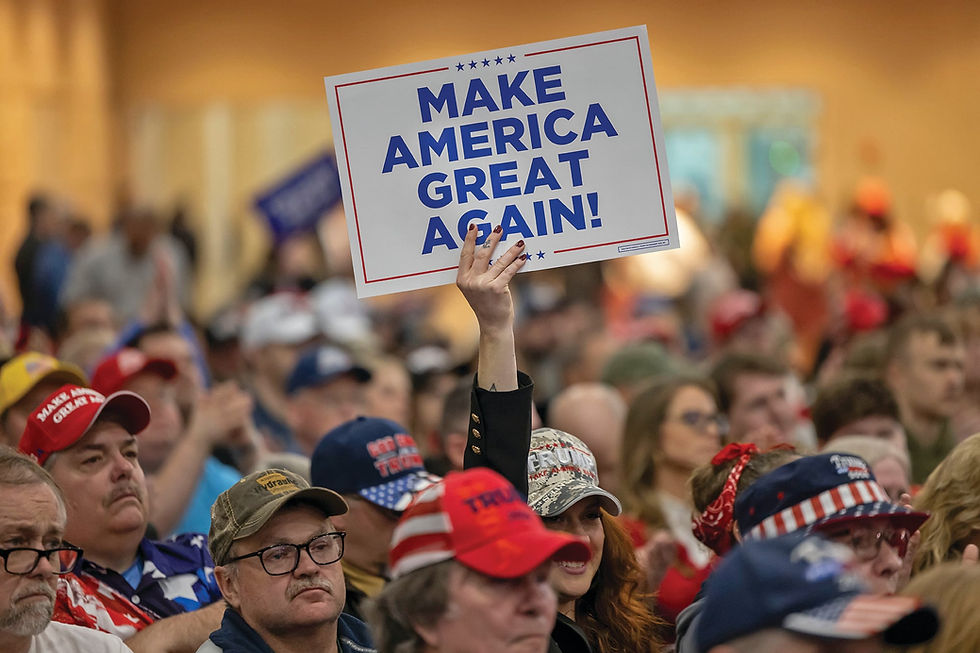
Marvel’s multiverse and MAGA are not two sides of the same phenomenon. Their stakes are obviously incomparable. However, their simultaneous appeal is worth considering in a country where many Americans increasingly feel that their nation’s best years may already be behind them. Entertainment companies promise what audiences once loved; political movements promise the return of what voters believe has disappeared. Perhaps this explains why nostalgia feels particularly difficult to escape today. Technology makes the past easier than ever to access, while corporations become increasingly efficient at repackaging it. Neither fully explains why revisiting what came before can feel so satisfying in the first place, nor does a culture frequently turning toward familiar worlds prove that Americans have lost faith in the future. But when the promise of restoration has become so persuasive in both our entertainment and our politics, it is difficult not to wonder whether the original, rather than the derivative, has become the harder sell.